What is Sample Storage?
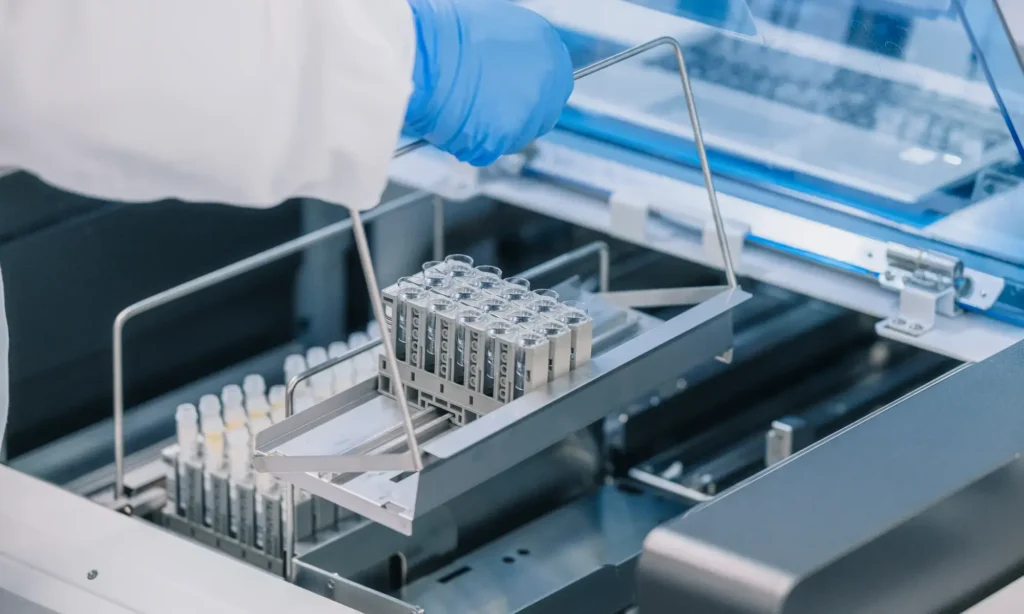
Sample storage refers to the temperature-controlled storage of biological materials (e.g., blood, serum, plasma, urine, and tissue) under validated conditions.
As a core element of pre-analytics, controlled sample storage – with 24/7 temperature monitoring and defined storage conditions – protects against quality loss caused by enzymatic processes, temperature fluctuations, or mechanical influences. This is critical for reliable results in clinical and analytical performance studies.
How is Sample Storage Carried Out at TRIGA‑S?
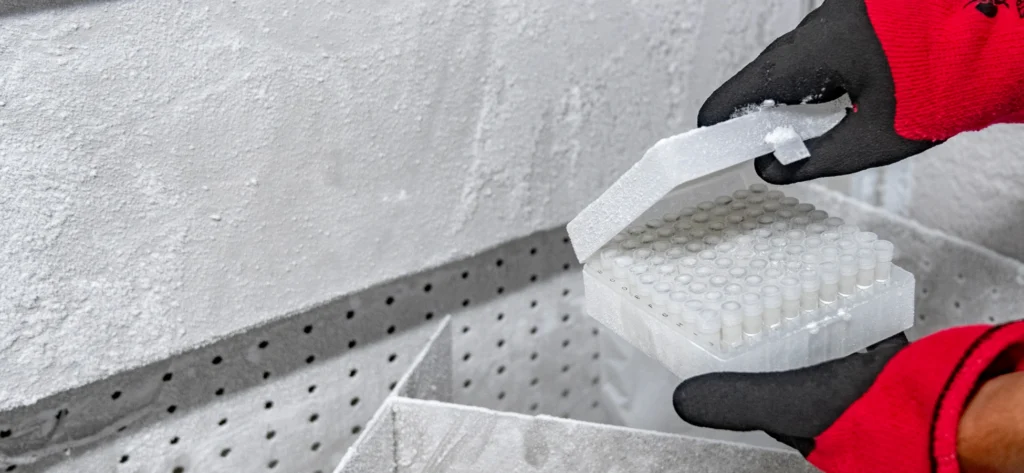
Our sample storage facilities in Habach (Bavaria) are equipped with robust redundancy systems. Continuous temperature monitoring ensures that samples can be stored at controlled temperatures of -90 to -60 °C, -25 to -15 °C, +2 to +8 °C, or room temperature (+15 to +25 °C), depending on requirements.
We use qualified and validated refrigeration and freezer equipment with uninterrupted monitoring and documented processes:
- 24/7 Monitoring: Continuous monitoring with remote surveillance and automated alarms
- Redundancy systems: Reliable cooling systems and backup capacities across all temperature ranges
- Emergency power supply: Continuous cooling maintained even during power outages
- Deviation management: Defined processes for temperature excursions (alarm escalation, risk assessment, etc.)
This guarantees uninterrupted temperature control and full preservation of sample integrity throughout the entire storage period.
Need to store samples securely and with full traceability? Get in touch!
Michael Radiske, Head of Sample Management
You Might Also Be Interested In
Diagnostics

Pharma